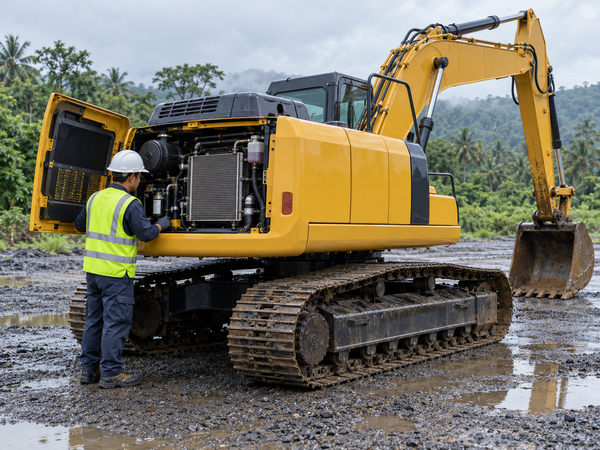
1. Protect Electrical Components from Moisture
Water and electrical systems are a dangerous combination.
Before and after daily operation, inspect:
- Cab sealing strips
- Wiring harnesses
- Electrical connectors
- Battery terminals
- Electrical control components
Any damaged seals or signs of water ingress should be addressed promptly to prevent short circuits and electrical failures.
Battery terminals should also be kept clean and free from corrosion to ensure stable electrical supply.
Air filters must remain dry. Water entering the intake system can cause serious engine damage.
2. Keep Drainage and Cooling Systems Clear
Mud, leaves, and debris can accumulate quickly during wet weather.
Regularly clean the:
- Engine compartment
- Radiator
- Air-conditioning condenser
- Undercarriage
- Travel motor areas
- Swing bearing surroundings
Keeping these areas clean helps maintain cooling efficiency and reduces corrosion and premature wear.
Cab doors, windows, and sealing strips should also be checked regularly. Damaged seals can allow moisture inside the cab, leading to mould growth and electrical problems.
3. Check Oils and Filters for Water Contamination
Rainwater entering fuel or lubricating systems can cause major equipment failures.
After heavy rainfall, carefully inspect:
- Hydraulic oil
- Diesel fuel
- Engine oil
Signs of contamination may include cloudiness, emulsification, foaming, or visible water separation.
If water contamination is detected, the affected fluid should be replaced promptly rather than continuing to operate the machine.
Water should also be drained regularly from the diesel fuel filter or water separator to protect fuel pumps and injectors.
4. Increase Lubrication and Rust Protection
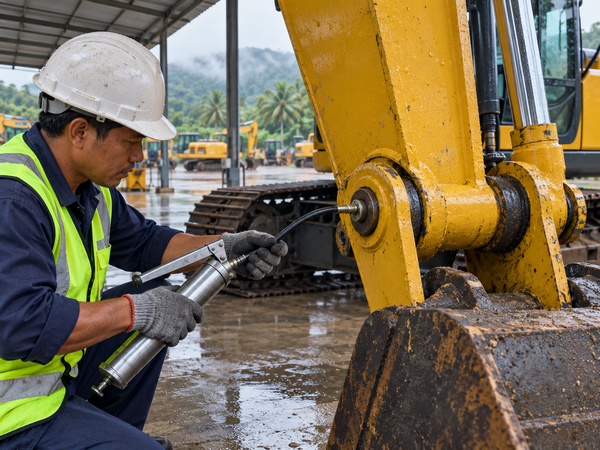
Rainwater can wash away grease and accelerate corrosion.
After operating in wet conditions, apply fresh grease to key areas such as:
- Boom and arm joints
- Bucket linkage
- Swing components
- Pins and bushings
- Other articulated connections
Mud and water should also be washed from the chassis and undercarriage after work.
For machines stored for extended periods, dry exposed surfaces and apply suitable anti-corrosion protection where required.
5. Park the Machine Correctly
Equipment should be parked on high, dry, firm, and level ground.
Avoid low-lying areas where water may accumulate or where flooding is possible.
When parking:
- Lower the bucket to the ground.
- Retract hydraulic cylinders where practical.
- Avoid leaving exposed cylinder rods extended for long periods.
- Use shelter or additional corrosion protection during long-term storage.
Proper parking can reduce moisture damage and protect hydraulic and electrical components.
6. Quick Rainy-Season Checklist
A simple rule to remember:
Inspect the ground before rain, slow down during rain.
Clean mud and drain water after rain.
Replace contaminated oil immediately.
Keep wiring and connectors dry.
Lubricate and protect against corrosion.
Stop operation during thunderstorms.
Hot, humid, and rainy weather creates tougher operating conditions, but regular inspection and preventive maintenance can substantially reduce machine downtime and safety risks.
For construction equipment owners, safe operation and timely maintenance remain the most cost-effective protection for both equipment and operators.