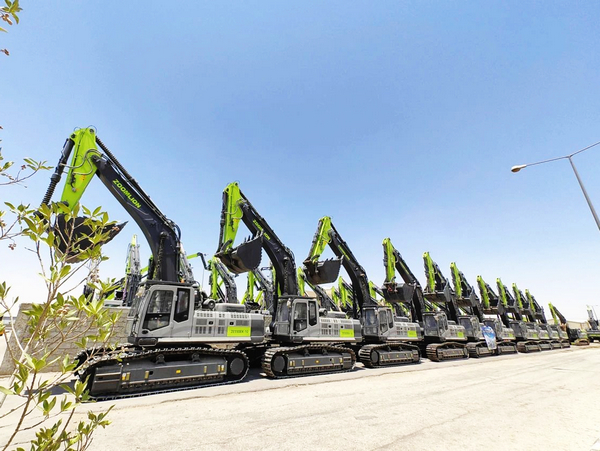
A new wave of price increases is spreading across the global construction machinery industry.
Recently, SANY Heavy Machinery issued a customer notice announcing that, effective May 15, 2026, prices for its excavator products will increase by 5%. The company cited sharp and continued increases in the prices of steel, oil, rubber, copper, aluminum, and other raw materials, which have significantly raised overall manufacturing costs.
Rising Raw Material Costs Drive Industry-Wide Adjustments
This is not SANY’s first price adjustment in 2026. Earlier this year:
- Hunan SANY Pumping Machinery raised prices of concrete machinery products—including pump trucks, mixer trucks, and batching plants—by 3%–5%
- SANY Robot Technology increased prices of its 1.6–8 ton electric counterbalance forklifts by 5%–10% starting February 1
The direct driver behind these adjustments is the rapid rise in raw material costs. SANY previously disclosed that compared with early 2025, prices of key materials such as copper, lithium iron phosphate, and lithium hexafluorophosphate surged by 33%, 106%, and 213%, respectively.
In recent years, global supply chains have faced mounting pressure from geopolitical factors, changing trade environments, and production fluctuations in resource-producing regions. At the same time, booming demand from the global new energy and energy storage sectors has intensified competition for core materials such as lithium and copper, keeping prices at elevated levels.
As cost pressure exceeds the limits of internal absorption, passing part of the burden to the market has become necessary for manufacturers to maintain product quality, technological investment, and sustainable service capabilities.
China’s Major Manufacturers Follow the Trend
SANY is not alone. Following its announcement, major Chinese manufacturers including XCMG and LiuGong also issued price adjustment notices. China’s construction machinery industry is now entering a new round of price increases in 2026.
Behind this trend lies the continued recovery and growth of the industry. According to the China Construction Machinery Industry Association:
- Total excavator sales in 2025 reached 235,300 units, up 16.97% year-on-year
- Excavator sales in Q1 2026 totaled 73,336 units, up 19.5%, reflecting strengthening domestic and overseas demand
Meanwhile, leading manufacturers reported stronger-than-expected financial performance in the first quarter of 2026:
- XCMG Machinery: Revenue of RMB 29.791 billion, up 9.26%
- SANY Heavy Industry: Revenue of RMB 24.147 billion, up 14.03%
- Zoomlion: Revenue of RMB 12.952 billion, up 6.89%
These results demonstrate the resilience and profitability of industry leaders despite rising costs.
Global Giants Also Raising Prices
The price increase trend is not limited to China. International construction equipment manufacturers are facing similar cost pressures:
- Caterpillar introduced a 3%–5% surcharge on certain models in March 2026 and plans a second round of increases of 4%–7% in July. Dealers report that some popular models, such as the CAT 320 excavator, are already priced 8%–10% higher than in January.
- Komatsu raised excavator prices by 7% and loader prices by 8% in February, with another 5% increase across all construction equipment lines scheduled for August. Some popular models have already accumulated price increases of 12%–13% since January.
- John Deere announced a 5% price increase across its construction and forestry product lines effective June 1, 2026, with dealers reportedly discussing an additional 3%–5% increase in September.
- Kubota raised prices of compact equipment by 4% in January and another 3% in April, with a third adjustment expected in Q3.
Will the Price Hike Trend Continue?
The data suggests that a globally linked construction machinery price increase cycle may already be taking shape in 2026. Rising raw material costs are forcing manufacturers to adjust pricing strategies in order to sustain product quality and service standards.
However, price increases still face multiple constraints, including intense competition from existing equipment inventories and the growing scale of domestic and international used equipment markets, which may limit how far prices can rise.
Whether the market fully accepts these increases remains to be seen—but for now, the global construction machinery industry is clearly entering a new pricing era.